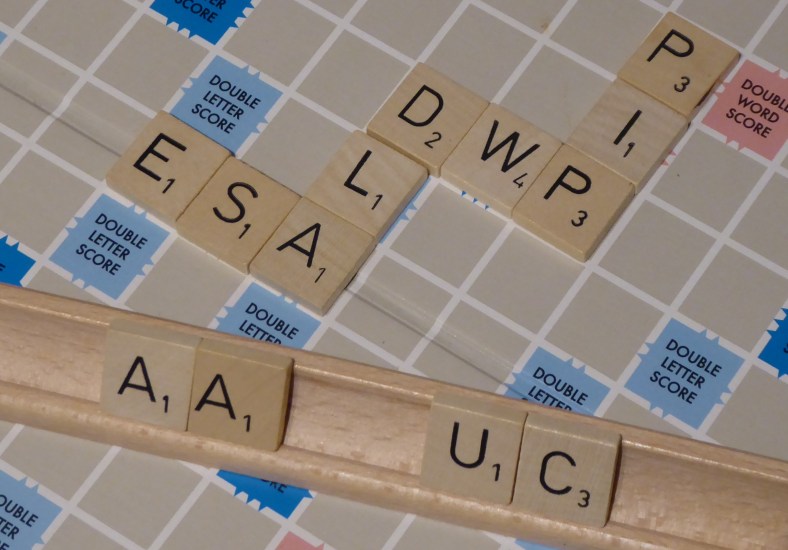
Does Hammond really think that those two changes to UC are enough?

budget 2018

I’ve just sat through the whole budget waiting for the government’s answer to the widespread concern over UC. All Hammond would recognise were concerns over just two issues. He promises some extra help for people moving over from existing benefits – two weeks of support for those moving from JSA, ESA or IS, but only after July 2020. And what about people making new applications? New applicants will go on having to wait those 5-6 weeks for their first payment, building up unmanageable debt, and creating huge problems for social housing providers as rents are delayed. All that has been promised for them is the possibility to pay back that debt more slowly, and that only after October 2019.

And Hammond will give more help to people in work by increasing the work allowance – ie raising the cut-off rate for eligibility. This is a reversal of previous cuts both to Tax Credits and then in the change from Tax Credits to Universal Credit.

They have also made it a bit easier for self employed people to get started – but it will go on being a nightmare for them after that; and they admit that the full change over to UC will not be complete until December 2023, though they still plan to begin to force people on existing benefits to move to UC from July next year.

Nothing has been done about the benefit freeze that has reduced the real levels of benefits for years, or the benefit cap that reduces some families’ benefits even further, or the rape clause, or the chaos caused by lack of staff and training…

And after that miserable announcement on UC, Hammond went on to announce a tax cut for big earners by raising the threshold for higher rate income tax.

And the whole budget was dressed up as a reward for the ‘hard work of the British people’ – a phrase he repeated multiple times to suggest we were all in this together – given to ‘hardworking families, strivers, grafters and carers’.

So no change to the rhetoric, and no change to austerity politics, and definitely not enough to quiet concern over Universal Credit!

More frequent payments – or just an even longer wait

Calendar

The Scottish Government squeezed three small concessions from Westminster on Universal Credit. First, people in Scotland can chose whether their housing element is paid direct to their landlord. And second, we can choose to have payments made twice a month rather than monthly. The trouble is that this is done by delaying half the payment for even longer. You will already have waited five or six weeks for your first Universal Credit payment – and likely got into debt as a result. Then at the end of the next month you will only receive half the amount. As a special concession you will be allowed to wait a further 15 days for the rest. When we met Stevie outside the jobcentre he had just discovered what twice monthly payments really meant, and had asked to go back on monthly payments as he couldn’t last on what he had received. (To make matters worse, he had been told that the wait was 3 weeks rather than 15 days, which is simply wrong.) Twice monthly payments can make it easier to plan – but not if you have to get into debt first.

Oh – and the third concession. Well, people in Scotland are supposed to get the option to receive Universal Credit individually instead of as a single payment for the household, but it seems that the Scottish Government hasn’t actually been given a mechanism that allows them to make that happen without the consent of both partners, so that third concession has been left on an inaccessible shelf.

*        *        *

Despite growing public concern about Universal Credit, Dundee jobcentre hasn’t given up trying to persuade people to shift onto the new system before they have to. We had reassured David that he didn’t have to move from JSA, but when he emerged from the jobcentre he informed us that they had found another way to make his life more difficult. Now that he has been unemployed for 18 months they are making him come into the jobcentre weekly. This was a fairly common practice a few years back, but we hadn’t come across it recently.

*        *        *

We have just learnt that our petition on mitigating welfare cuts will finally be discussed by the Scottish Government Social Security Committee on Thursday. Here is the agenda.  You will be able to watch the discussion on line here.

Have you applied for PIP?

Scrabble

This is a question we often ask people who have applied for ESA (or the equivalent under Universal Credit) – especially if they have had their ESA refused and are wondering how they will survive. And often we discover that people haven’t applied for PIP because they don’t know what it is. DPAC (Disabled People Against Cuts) have found people similarly confused when talking to them outside the assessment centre in Glasgow. So we thought it might help if we wrote a brief explanation.

One cause of the confusion is that the names chosen by the DWP follow some weird logic that is known only to them and has no base in reality. Their most incomprehensible name is Employment and Support Allowance (ESA), the name for the benefit given to those unable to work. In areas that fall under Universal Credit full service, ESA has been swallowed up into Universal Credit, but the system for demonstrating that you are unable to work remains very similar.

PIP stands for Personal Independence Payment and replaces the rather more easily understood Disability Living Allowance. Basically, it is designed to compensate for some of the extra costs associated with being sick or disabled. You can get PIP whether or not you are working and whether or not you also receive ESA/Universal Credit, and it is NOT means tested. Although the application for ESA and PIP is somewhat similar – both make use of a detailed questionnaire and simplistic ‘tick-box’ style ‘medical’ assessment carried out by a private company – they are looking for slightly different things. PIP, like DLA, can be awarded for problems with daily living or problems with mobility or both. Daily living means things like getting up and bathed and dressed, and making and eating food. Problems need not be physical, they can include things like being too depressed to get up, or too feart to go out on your own. Like for ESA, it is a good idea to get someone who knows the system, and what scores points, to help fill out the form; and it is also good to get someone to come with you to the assessment to check the key points are covered and to ensure that the subsequent report is an accurate reflection of what actually happened – as well as to give moral support. There is lots of advice on all this on the internet, e.g. from Benefits and Work.

In case this isn’t confusing enough, children under 18 still get DLA rather than PIP, and if you are a pensioner the relevant benefit is Attendance Allowance, which doesn’t include the mobility bit. If you are already on PIP though, you stay on that rather than move to Assistance Allowance, so if you have mobility problems and are getting older, you might want to apply for PIP before it is too late (the exact rules are complicated).

And, of course, sometime in the now not so distant future, PIP, DLA and Assistance Allowance will be taken over by the Scottish Government and replaced by a system that we are promised will be much fairer…

What is the future for Universal Credit?

future for UC

Ian Davidson predicts minimal changes in this guest blog

With the political & media classes reigniting debate on UC (as here in the Guardian) – perhaps as “light relief” from Brexit – here is my own brief analysis of this latest round of discussion:

Whilst any public discussion about “stopping” UC is welcome, it would appear that most commentators are only asking for the “managed migration” process, i.e. the second phase of the “roll-out” due to commence in July 2019 to be halted. As explained in the Guardian article above, this is the phase where existing claimants of old style benefits would start to be “migrated” on to UC (i.e. you will be “invited” to claim UC, and will have no choice if you wish to continue on income-related benefits). They also appear to be asking for the original “goodies” in UC, e.g. the “work allowances” and uprating which were taken out in the 2015 budget, to be re-instated before this second stage roll-out begins. Unless I am misinterpreting, I don’t hear any mainstream call for the whole concept of UC to be scrapped or for the current first phase roll-out (all “new” claimants for income-related type benefits to claim UC by Dec 2018) to be stopped, scrapped, halted or whatever. However, if there are changes to UC such as the re-instatement of work allowances, then the claimants who are already on UC will presumably benefit.

The present government can, with relative ease, respond to some of these new demands whilst not giving way on the principle of UC. The July 2019 start for second-stage roll-out is flexible (as has the first roll-out been), and no-one is going to complain if the second stage roll out start is further delayed and implemented even more gradually. Likewise no-one is going to complain if the work allowances etc. are re-instated and some form of uprating in line with inflation introduced. No-one is going to complain if the migration of existing tax credits claimants (perhaps the most politically sensitive group) is left alone for a while, even until after the next UK General Election. No-one is going to complain if local authorities and the Scottish Government are given some more monies for mitigation, alongside further “tweaking” of claims administration, a “lighter” touch to sanctions etc.

Any positive changes to UC are good news. However, it is too early to celebrate, as the government will probably make just sufficient changes to survive politically whilst retaining the core principles of UC. The need for claimant advice, appeals, legal challenges, foodbanks and political campaigns will continue as UC is “rolled-out” with slightly slower speed and slightly improved presentation.


Out of the frying pan, into Universal Credit – a stall report

18-10-01

Frankie was a worried man. A week ago on Sunday he had started work at a restaurant as a kitchen porter. At least, that was the job that had been advertised, but when he got there he found he was expected to do everything, including cooking the breakfast and ordering the stock. He doesn’t know how to cook, let alone sort out the orders. He was given no training, but by Wednesday he was left to manage on his own. He was checking deliveries at the entrance at the same time as keeping an eye on the cooker and panicking about serving undercooked sausages. He told his friends that he was feeling suicidal with it all. Sensibly, he had left the job before any disaster struck, but now he was terrified about being blamed for not working, and so not being given benefit. He was so nervous, that I went into the jobcentre with him. He needn’t have worried about his treatment there. The woman couldn’t have been nicer, but (there’s always a ‘but’) she can only work within the system, and that has left him with two possible sources of further worry. Before he got the job at the restaurant he was on JSA. When he got the job he signed off, and now, signing on again, he has to be on Universal Credit, with all the problems that implies. And although the woman at the jobcentre helped him to make his new application, and stressed the importance of writing down all the details of what happened, it is not her who makes the decision about sanctions. Frankie must now wait for the verdict of the anonymous Decision Maker.

Pam was hoping to get Universal Credit to help with housing costs now that her husband’s hours have been dropped down to 21 a week. She was shocked when we warned her that, as he would be earning less than the equivalent of 35 hours a week on the minimum wage, he would be made to spend the rest of his time looking for more or better paid work. We suggested they get a benefit check done at Shelter, who would also be able to advise on possible options.

Jill had just signed onto Universal Credit having become unemployed for the first time in years. We told her that since her National Insurance payments will be up to date she should be on New Style (i.e. contribution based) JSA instead, and recommended she sort this out as soon as possible. The DWP seems to be very bad at spotting this one.

Andrew had just lost the chance of a job in the Midlands because the DWP had refused to help with the interview travel costs, even though these would be refunded afterwards. He had only recently signed up to Universal Credit and was shocked to have received no benefits on what should have been his first payment day. His final salary from work had been paid to him after he had applied for UC, and had been counted as income for the first month’s calculation. He was thus deemed not to need any benefit that month, and won’t get anything at all for a further month. (See how it ‘works’ here.).

Mark and Ruth were both applying to be recognised as unfit to work – so we impressed on them the importance of getting help with the medical form from someone (such as a welfare rights officer) who knows how the points system works. And we asked them to contact us later if they need someone to accompany them to their work capability assessment.

John had worked in security. He informed us – as he had previously had to inform the jobcentre – that security staff must wear visible name badges and shouldn’t lean over you when you are having a private conversation. Could be useful to know!

£15 a week to get to a computer

leftfest

The people who came up with the requirement that all Universal Credit claims must be managed on line can’t live in the real world – and certainly not in rural Scotland. Yesterday, one of the people who visited our stall at Leftfest told us of a friend who was expected to make 30 minute bus journeys to get to a computer, at the cost of £15 a week. That’s more than 20% of the miserly weekly benefit payment!

And although you should be able to get help in this situation, he clearly had not been made aware of that.  The minds that conjure up detailed rules about sanctions from the comfort of well-paid jobs, don’t seem to have expressly addressed what must be a common and predictable problem; however this is something that the jobcentre’s Flexible Support Fund could help with. It is clearly unreasonable to expect you to spend this amount of money out of your benefits, so if the jobcentre won’t provide help with travel costs, or allow you to use an alternative method of communication and jobsearch, then you need to put in a formal complaint. An MP’s letter could make all the difference at this point…

(Thanks to CPAG for discussions on this issue.)

The picture was taken at Leftfest

Nothing for the weekend

foodbank_warehouse_20131127_0108-382x218

Outside the jobcentre on a Friday afternoon we are very aware that any problems will not be resolved till at least next week. It is only the foodbanks that can save people from a hungry weekend. The two people we referred to the foodbank this week had both found themselves penniless after being caught out by the new payment schedule under Universal Credit. Instead of the fortnightly payments of the old system, UC is paid monthly. Without a hint of irony, the DWP claims that this is meant to help people prepare for monthly wages, though the amount paid is only a fraction of what you would get in work. They were warned from when this was first proposed that it would cause problems, and of course it has.

In Scotland you can ask for the payment to be staggered so that you get your money twice monthly instead. This is almost like the previous fortnightly payments, but not quite; and that was Richard’s undoing. He had been under the impression that he would get his benefit payment two weeks after the last one and had budgeted accordingly. When he asked why he hadn’t been paid he was told the money wasn’t due until Tuesday.

Lisa was getting monthly payments and was unable to budget that way – especially with money being taken off for debt repayment. She knew she couldn’t cope and was trying to arrange twice monthly payments instead, but meanwhile she had spent her meagre allowance and there was still two weeks before her next payment was due.

This is a system that sets people up to fail. With benefits pared to the bone, it demands a level of financial planning that few if any of its authors could even conceive of. Foodbanks are under huge pressure, but what is remarkable is that this is not even greater.

The right to take notes

Maximus doodle

Every so often we have to remind the powers that be that claimants and their friends always have a right to take notes at interviews – as is clearly stated in the DWP’s own guidance documents. Most recently, we had to write the following letter to Maximus, who run the Work Capability Assessments in Scotland:

We are writing because we are concerned that your Dundee assessment centre is giving confusing advice about taking notes in assessments. We have been informed by someone who accompanied a friend to her assessment recently that, rather than the usual warning that you can take notes but these won’t be treated as an official record, she was simply told that she couldn’t use her notes in a tribunal. This is both incorrect (they can be used but won’t necessarily be accepted as an accurate account), and likely to make an already worrying situation worse. Personal notes can be an important aide memoire, and it is very worrying if people are being discouraged from taking or keeping them. It is also unnecessary to raise the spectre of a future tribunal. The assessor had gone out of the room to ask advice on this, which suggests that this confusion is likely to be replicated by others. Please can you insure that all your assessors are fully aware of the rules on note taking and the correct procedures for conveying those rules?

We got an almost instant response from Maximus saying they would inform their Dundee centre. We have heard nothing from Dundee, but trust they have taken the message on board…

Please let us know if you are having similar problems anywhere. We know this sort of misinformation can be common as well as damaging. And always insist that you have a right to take notes – which you don’t have to show them.

 Watch out for workfare!

boycott workfare new logo

Our last week’s post about unpaid work for M&S got a huge response. We have collected some of the comments below. Please let us know if you are being asked to work for nothing. Businesses that are exploiting the unemployed need to be NAMED AND SHAMED.

J – 3 years ago I worked for M&S for two weeks full time unpaid with the promise of a job at the end of it… guess what I’m still waiting

K – I’ll be getting put on this in October as “it will help get me experience”

A – I did 4 weeks with M&S. Got a job out of it for 3 months. Told they would extend my contract but didn’t
Went back on benefits and went from JSA to UC losing out on £250 a month

M – I was on that scheme for 4 weeks and it was horrible

Was hoping to get a job out if it
NOPE…

I was sent there by a scheme who help people who are struggling to find work…
It was a year ago and my experience told me not to work for M and S ever
They only care about sales and you have to be pushy even in food it was horrid…

What struck me is that I told the people who sent me to M and S that I’m not good at approaching customers and sales, assuming they’d pass this along to M and S. Nope, so when I was not very good at this and not pushy with upselling stuff I was told off, and I’m like I am not good at this and I hate it as a customer so why would I want to do it to other customers…

I mean, I was told that I could get a job out of it, that’s why I did it. Out of the 4 people who started including me, the only one who got a job was the guy who had come out of retirement. We weren’t all disabled we were just finding it hard to find work. There were 2 girls as well one who was in a wheelchair who didn’t get jobs; then again the store was not wheelchair friendly if you were staff…
I was getting shit from the Jobcentre for not looking for work at the same time, even though I thought it was better to concentrate on the placement to help improve my chances…

Also we had a £3 allowance for lunch each day but in M and S you’d be lucky if that got you a basic sandwich.

I did a similar scheme for Tesco but within 2 days of being there, they wanted to hire me cause I was able to stack shelves. I’ve been there 9 months almost.

[This writer liked the fact that he could prove he could do the Tesco job and didn’t have to struggle with an interview – but of course he could and should still have been paid for his trial period.]

C – M&S have been doing this for a long time. My friend did unpaid work for weeks and then had to apply for a 6 month post, at the end of which had to apply for another 6 month post. No job security, sick pay etc. Took years of this before she was eligible to apply for a permanent post.

N – The management there are terrible. They lie and cheat saying they help people with disabilities which is untrue, they just care about making money and profit. I used to work for them until November 2016. Only for 23 months.

W – Serial offenders. About 5 years ago, a friend’s daughter who was of 6th form age answered an M&S advert targeted at school leavers. She was attempting to do the right thing by working whilst her longer term plans materialised. After two weeks work in the store, she was given her first payslip which showed zero pay. She was told this was because those two weeks were ‘training’. It was the first she had heard of this and was very upset. Within weeks, her employment was terminated. The reason given for this was that she had reached the age where the minimum age applied (they had been paying less than the minimum wage). Other recruits in her cohort were subject to the same rule.

L – They [M&S] joined [this scheme] a few years ago using the Prince’s Trust… only a few [people] are kept on temporary to see them over their busy period, then they are let go. Very few if any will actually get a permanent job as most of the staff are on short term contracts

B – Brilliant! That means we can go into an M&S and just take stuff without paying.

G – Total sham – so every manager should work for free too then

D – Let the shareholders work for nothing.

P – I have boycotted Marks & Spencer since Rose was CEO and said that Companies which stopped using workfare because of protests were cowards. M & S has always not only used it but promoted it.

[Here’s a link to what the writer is referring to.] 

R – My wife did 3 unpaid trials for Premier Inn at 3 different hotels. They just wanted extra people to help with their breakfasts. Absolutely disgraceful

Remember that a task set by the jobcentre is only mandatory if it is part of your claimant commitment, or you are given a Jobseeker’s Direction (JSA) or a Requirement (Universal Credit). If you are 18-21 and have been unemployed on UC for 6 months you can be mandated to go on training or a work placement.  If you are sent on a mandatory work placement you can still refuse to sign the documents that are needed for them to process it, so long as you show willing to do everything else. (See our Work Programme Survival Guide.)


Unpaid labour for M and S, anyone?

M and S

So, Markies have joined the list of companies expecting people to work for free in order to win the privilege of a job interview: four weeks’ work receiving only unemployment benefit (paid out of the public purse), and just the promise of an interview at the end. And, of course, with lots of people working for free, they should actually need to employ fewer paid workers. The young graduate who told us of this offer from the jobcentre was far from impressed, but others will no doubt be persuaded that they have little choice, either through fear of saying no to the jobcentre – although this scheme is not actually mandatory – or through lack of other opportunities.

And last week we also talked with Paul, an angry and frustrated man with serious health problems, who had been on ESA and PIP but had had his ESA claim stopped when he went into hospital for six days. He had been made to reapply through the Universal Credit system, and had thereby lost hundreds of pounds in disability premiums. The ending of these premiums in Universal Credit is a major cut for disabled people that is rarely talked about. In Paul’s case this should also never have happened, because the original ESA claim should not have been closed.  Paul was already getting help to appeal, but we also came across a couple of people with complicated problems who weren’t getting help, who we sent to the Shelter drop-in.

And talking of limited job opportunities – the army was in the jobcentre again, carrying out their economic conscription.